Good Monday: A Modern Script Font for Branding Projects
There’s something oddly satisfying about opening a blank brand board and watching a font come to life on the screen. Recently, I found myself in that exact moment while working on a boutique skincare brand identity. The client wanted something elegant yet approachable—something that felt like a handwritten note from a friend. That’s when Good Monday stepped into the frame.
What Is Good Monday?
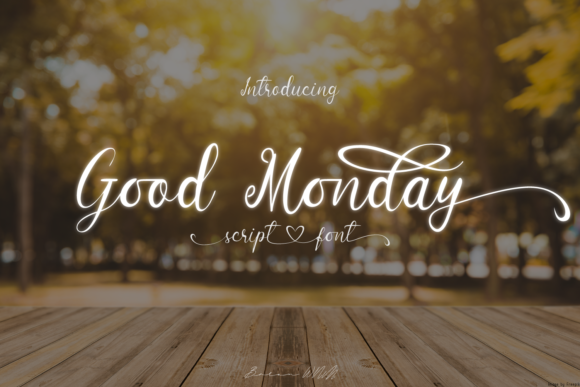
Good Monday is a modern script font with a delicate and thin touch. It feels like it was drawn with a fine-tipped pen, giving it a soft, flowing appearance. As a PUA encoded font, it offers easy access to all glyphs and swashes, which makes it a breeze to customize for creative projects. This font sits comfortably within the Script Amp category under Fonts, making it a go-to for designers who need a premium display font with character.
The personality of Good Monday is subtle but present. It carries a mood that’s both refined and friendly. Its style leans toward the contemporary, with clean lines and minimal embellishment. It’s not overly ornate, which makes it versatile for a range of branding applications.
Testing Good Monday in Real Projects
I tested Good Monday across several design elements in the skincare project: a logo draft, brand board, packaging mockup, business card, website header, and social media layout. In each case, the font added a sense of elegance without overpowering the message.
On the logo concept, Good Monday worked beautifully as a headline font. It gave the brand a personal, artisanal feel that resonated with the target audience. When placed on a product label, it maintained readability while adding a touch of sophistication. On a business card, it looked crisp and professional, even at smaller sizes.
For the website header, I paired Good Monday with a clean sans serif font. The contrast helped establish visual hierarchy, ensuring that the main headline stood out while keeping the supporting text clear and legible. On Instagram posts, the font felt natural in captions and call-to-action buttons, reinforcing the brand’s voice.
When to Use (and When Not to Use) Good Monday
Good Monday shines in short phrases, headlines, and decorative accents. It’s best used as a display font or accent typeface rather than for long body text. Its delicate nature means it may not be ideal for small sizes or low-resolution prints where clarity could suffer.
Projects that require a more formal or corporate tone might find this font too casual. Similarly, if you're designing for a technical or data-driven brand, Good Monday may not align with the desired aesthetic.
That said, for brands looking to convey warmth, creativity, or a personal touch, this font is an excellent choice. Think handmade shops, local bakeries, creative studios, or any brand aiming for a softer, more human feel.
Font Pairing and Practical Tips
When pairing Good Monday, I found that a strong sans serif font like Montserrat or Lato provided a solid balance. For editorial design or web pages, using a serif font like Playfair Display alongside Good Monday can create a harmonious blend of elegance and modernity.
If you’re considering using Good Monday in client work, it’s crucial to check the commercial font licensing. Ensure that the font is permitted for use in brand identity, packaging, templates, merchandise, websites, digital products, or print-on-demand items. Always test the font in your final design context before committing to it.
Also, take advantage of the PUA encoding feature. It allows you to access special characters and swashes, which can elevate the look of your designs significantly. Experiment with different alternates to see how they affect the overall feel of your project.
Finally, don’t forget to consider file formats and webfont availability. If you're planning to use Good Monday online, ensure that you have the necessary webfont files to maintain consistency across platforms.